

Let me start by saying this: my childhood was less than ideal. My childhood experiences account for most of my less than ideal adulthood. A good amount of my expectations for adulthood originated from vowing to myself, that when I grew up, my life would be perfect! Looking back I see that a lot of adverse events in my adult life were created simply because I relied to much on that promised perfection from my childhood.
For most of my life, I thought perfection was the answer.
Growing up with an abusive mother and an absent father, I promised myself that my adult life would be nothing like what I came from. I wanted control. Peace. Beauty. Stability. Family. And I believed that if I just did everything “right,” I could finally feel safe. Loved. Whole.
But the truth is, perfection became its own kind of prison.
I found myself drawn to people and situations that mirrored the very wounds I was trying to escape—abusive relationships, one-sided friendships, moments where I swallowed my pain just to keep things appearing perfect on the outside. I held on tightly, thinking if I just tried harder or changed myself enough, things would eventually become what I longed for.
Spoiler: they didn’t.
What I’ve learned—slowly and painfully—is that chasing perfection will never lead you to peace. It will keep you stuck, exhausted, and disconnected from your own needs. Healing didn’t come from doing things perfectly. It came from falling apart, looking inward, and choosing to build something honest from the ruins.
This post is for anyone who’s ever tried to earn love by being flawless, by being perfect, and by accounting for other people’s shortcomings as it relates to you. It’s for the perfectionists who are tired. It’s for the ones who are ready to lay it down and start again—from a place of self-compassion, not fear.
My perfectionism didn’t come out of nowhere. It was born in survival.
As a child, I learned to walk on eggshells—always trying to avoid the next explosion, the next moment of disappointment or punishment. My mother’s abuse taught me that love was conditional, and my father’s absence made it feel like I had to work twice as hard just to be seen. So I did what a lot of kids in pain do: I started performing.
What started as coping became identity. I became the overachiever, the responsible one, the “strong friend” who always had it together. And I carried that mask well into adulthood—believing that control and perfection would protect me from ever feeling powerless again.
But the thing about perfectionism is it doesn’t actually protect you. It isolates you. It convinces you that if you’re not flawless, you’re not lovable. It trains you to ignore your instincts, your needs, and even your pain—just so you can maintain the illusion.
And I did. For years.
The Double-Edged Sword
Perfectionism gave me things—at least in the beginning.
It gave me control in chaotic spaces. It helped me succeed in school, work, and social situations where being “put together” was praised. People admired my strength. They leaned on me. I became the one who always knew what to do, who never showed cracks, who made things look easy—even when they weren’t.
I was the friend that was always gave the listening ear, only to be ridiculed when I needed that shoulder in return. I was the Girl Scout leader that always made her little scouts happy, the church member that always volunteered for every event, and the school parent volunteer that spent entire work shifts at the school. The married (single) mom that often had to barter with her husband and protest for free time without the kids.
Behind the scenes, I was unraveling.
What looked like confidence was often fear.
What looked like success was often survival.
What looked like discipline was often desperation not to fall apart.
Perfectionism made me delay decisions, second-guess myself, and procrastinate out of fear that I’d get it “wrong.” I stayed in harmful relationships far too long, convinced that if I just loved harder, showed up better, or fixed myself enough, things would magically change. That I could make it perfect.
But the truth was: perfectionism didn’t protect me—it paralyzed me.
I wasn’t being careful. I was being caged.
There’s a quiet kind of suffering that comes with constantly trying to be enough. And for a long time, I didn’t realize that perfectionism was a trauma response. It wasn’t ambition. It was fear of abandonment dressed in high achievement. It was the echo of a little girl who just wanted to feel safe.
The Turning Point
There wasn’t just one moment that shattered the illusion—there were many.
Each one chipped away at the wall I had built around myself: a friendship that left me drained, a divorce that gave me hope only to once again find partners who mistook my softness for something to exploit, a season where even my best efforts still weren’t enough. Over time, those moments stopped feeling like coincidences and started looking like patterns. Patterns I could no longer ignore.
One day, I found myself completely exhausted. Not just physically—but emotionally, spiritually, and mentally worn out from trying to curate a life that looked perfect but didn’t feel like mine. I remember looking at myself—really looking—and realizing that I didn’t even recognize the girl staring back. She was tired of pretending. Tired of shrinking. Tired of striving. And in that quiet breakdown, something unexpected happened: I stopped performing. I stopped trying to save relationships that were breaking me. I stopped trying to make everything look polished. I gave myself permission to fall apart.
And that—ironically—was the beginning of my healing.
Letting Go (or Trying To)
Letting go of perfectionism didn’t happen overnight. Honestly, I’m still unlearning it every single day.
At first, I thought healing would be a straight line. I imagined I’d journal a few times, cut off the toxic people, and suddenly be whole. But healing isn’t neat. It’s messy, uncomfortable, and often lonely—especially when your identity has been built around being the strong one, the good one, the one who has it together.
But I kept going. Slowly. Gently.
I started doing the kind of self-work that felt foreign at first. I went inward. I got honest—with myself and with others. I began practicing softness, even when my instincts screamed for control. I cried when I needed to. I let myself be witnessed in imperfection. I started asking: What do I need? instead of What do they want from me?
Some of the things that helped me:
- Setting boundaries I never knew I was allowed to have
- Allowing rest without guilt
- Choosing people who made space for my healing, not just my highlights
- Remembering that “good enough” is still good
- Giving my inner child the voice she was never allowed to use
Self-cultivation became my anchor. It wasn’t about “fixing” myself anymore. It was about meeting myself—again and again—with compassion instead of criticism. I worked out a little more, for me. I ate healthier foods, for me. I took small trips and learned to try out eateries that I always wanted to try. I read more, and focused more on mindfulness. I realized that my life alone doesn’t hold any less weight as the life of those that are not alone. I learned how to budget and stop allowing myself to recklessly trauma-spend down to the last dime. I found joy in my hobbies and started sleeping alone better at night.
And with every small act of grace, I reclaimed a part of me that perfectionism had silenced.
What I Want You to Know
If you’re reading this and you’ve been carrying the weight of perfectionism—I want you to know that you are not alone. And more importantly, you don’t have to keep carrying it.
You don’t have to be flawless to be lovable. You don’t have to be in control to be safe. You don’t have to shrink yourself to keep others comfortable. You were never meant to perform to be worthy. You already are.
Perfectionism will lie to you. It will tell you that love is something to earn. That mistakes make you unworthy. That abuse is something deserved and that it’s your duty to fix person that keeps hurting you. That softness makes you weak. But the truth is, love begins when you stop performing. Healing begins when you allow yourself to be seen—messy, raw, real.
You are allowed to outgrow the version of you that was only trying to survive.
Here’s what’s helped me, and maybe it can help you too:
- Start by noticing when you’re choosing perfection over peace.
- Speak to yourself the way you would speak to a child you love.
- Release the idea that healing has to be pretty. Sometimes it’s just honest.
- Let go of relationships that only love the version of you that’s always “fine.”
- And remember: Your worth has never been tied to your performance.
You are not broken—you are becoming. And that journey, in all its mess and magic, is far more powerful than perfection ever could be.
Conclusion: The Beauty in Becoming
I used to think perfection was the goal. Now I know it was a mask—one I wore to protect the parts of me that felt too tender, too broken, too much.
But here’s what I’ve learned: I’m not too much. And neither are you.
The real magic didn’t happen when I finally “had it all together.” It happened when I let it fall apart and started choosing myself anyway. Over and over again. With trembling hands and an open heart.
If you’re somewhere in the middle of that process—unlearning, healing, becoming—I see you. There is so much beauty in your becoming. So much strength in your softness. And there’s a whole life waiting for you on the other side of perfection.
So I’ll leave you with this:
What would your life look like if you stopped trying to be perfect, and just started being you?
You’re allowed to find out.



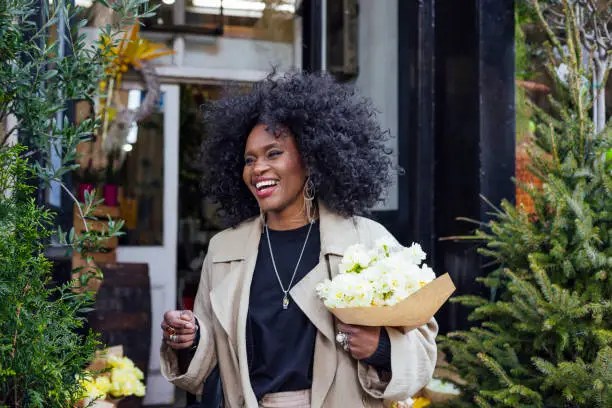


 Self Cultivation